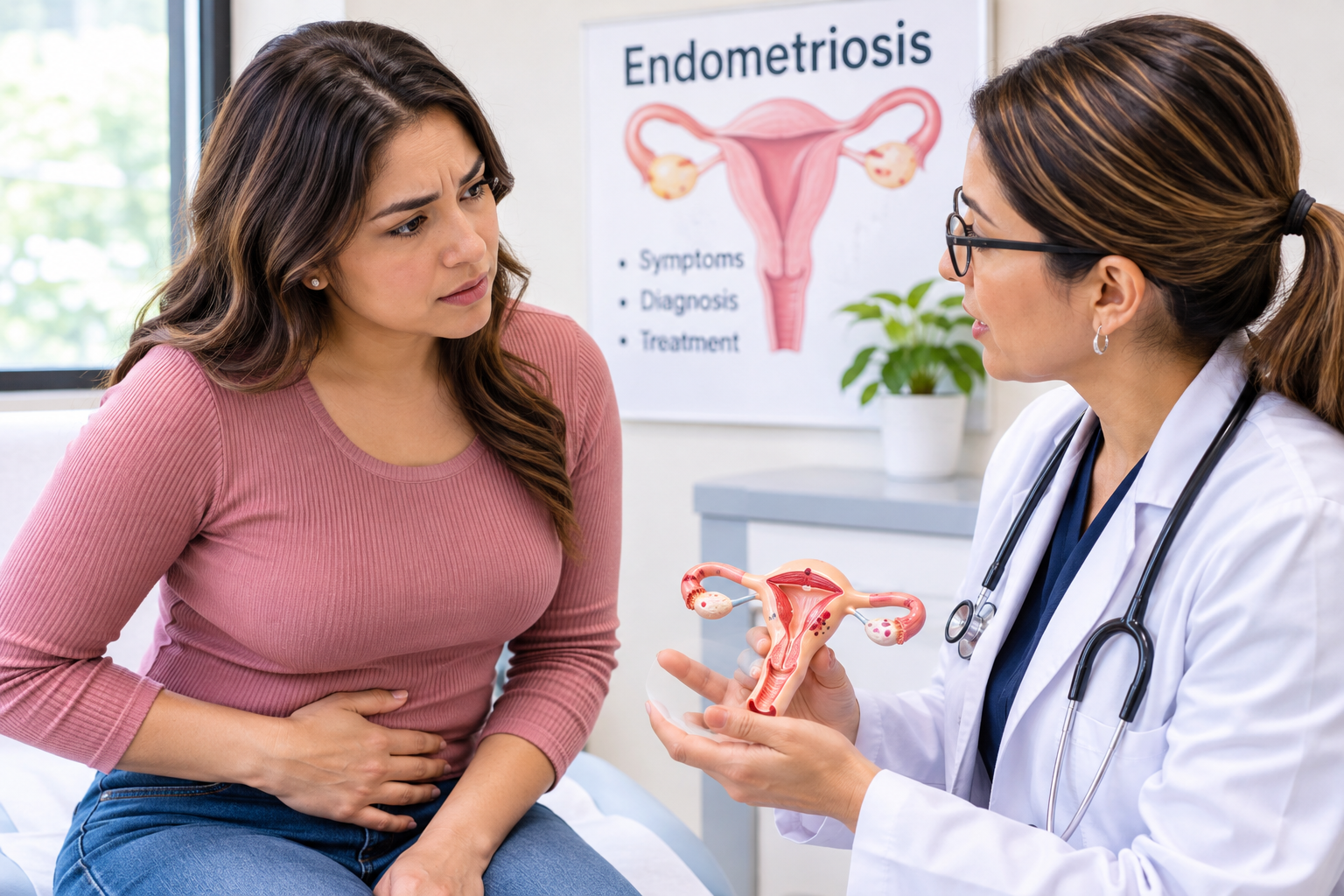
Severe menstrual cramps are often dismissed as a normal part of having a period. However, when menstrual pain interferes with daily activities, work, school, or relationships, it may be a sign of an underlying gynecological condition.
One possible cause is endometriosis, a chronic condition that can cause pelvic pain, painful periods, discomfort during intercourse, and difficulty getting pregnant.
Endometriosis affects approximately 10% of reproductive-age women and girls worldwide, according to the World Health Organization (WHO). Despite how common it is, many people experience delays in diagnosis because its symptoms can resemble other conditions.
Understanding the warning signs and knowing when to consult an OB-GYN can help you take an important step toward better reproductive health.
What Is Endometriosis?
Endometriosis is a condition in which tissue similar to the lining of the uterus grows outside the uterus.
These areas of tissue may develop around the ovaries, fallopian tubes, pelvic lining, and other organs. They can respond to hormonal changes during the menstrual cycle, contributing to inflammation, irritation, and pain.
Over time, some patients may develop scar tissue or adhesions that cause pelvic organs to stick together.
Endometriosis is a chronic condition. Although there is currently no definitive cure, several treatment options can help manage symptoms and improve quality of life.
8 Common Symptoms of Endometriosis
Endometriosis does not affect everyone in the same way. Some women experience severe pain, while others have mild symptoms or no noticeable symptoms at all.
Here are eight signs worth discussing with a healthcare professional.
1. Severe Menstrual Cramps
Painful periods are one of the most recognized symptoms of endometriosis.
The discomfort may begin before menstruation, become more intense during the period, and interfere with everyday activities.
If menstrual cramps regularly prevent you from working, attending school, exercising, or completing normal activities, consider scheduling a gynecological evaluation.
2. Chronic Pelvic Pain
Some women experience pelvic pain that continues beyond their menstrual period.
This discomfort may occur in the lower abdomen, pelvis, or lower back. It can be persistent or appear at different points throughout the menstrual cycle.
Chronic pelvic pain should not automatically be considered a normal part of menstruation.
3. Pain During or After Sexual Intercourse
Pain during or after sex can be associated with endometriosis, particularly when lesions or inflammation affect areas surrounding reproductive organs.
This symptom can affect physical comfort, emotional well-being, and intimate relationships.
A healthcare provider can help evaluate possible causes and discuss appropriate treatment options.
4. Heavy Menstrual Bleeding
Some women with endometriosis experience heavy menstrual periods or spotting between periods.
Signs of unusually heavy bleeding may include:
- Needing to change menstrual products very frequently.
- Bleeding that lasts longer than usual.
- Passing large blood clots.
- Experiencing fatigue or weakness associated with blood loss.
Heavy bleeding can have several possible causes, so an evaluation is important.
5. Painful Bowel Movements
Endometriosis may affect areas near the bowel, causing pain during bowel movements.
Some women notice that digestive discomfort becomes more intense during menstruation.
Symptoms may include abdominal pain, bloating, constipation, or discomfort when passing stool.
6. Painful Urination
When endometriosis affects areas near the bladder or urinary tract, some women may experience pain when urinating.
This discomfort may be more noticeable during menstruation.
Painful urination can also be caused by urinary tract infections and other conditions, so medical evaluation is important.
7. Difficulty Getting Pregnant
Endometriosis can affect fertility in some women.
Inflammation, scar tissue, and changes involving the ovaries or fallopian tubes may interfere with reproductive processes.
However, having endometriosis does not automatically mean you cannot become pregnant. Many women with the condition conceive naturally, while others may benefit from fertility evaluation and treatment.
8. Fatigue and Digestive Discomfort
Chronic pain and inflammation can affect overall well-being.
Some women report fatigue, abdominal bloating, nausea, and digestive symptoms that become more noticeable around menstruation.
These symptoms are not exclusive to endometriosis, but they should be discussed with a healthcare professional if they are persistent or disruptive.
What Causes Endometriosis?
The exact cause of endometriosis is not fully understood. Researchers continue to investigate the biological and environmental factors that may contribute to its development.
Several possible explanations and contributing factors have been studied, including:
- Genetics: Having a close family member with endometriosis may increase the likelihood of developing the condition.
- Immune system factors: Differences in immune system function may influence how the body responds to tissue growing outside the uterus.
- Hormonal influences: Estrogen plays an important role in the development and activity of endometriosis.
- Cellular and developmental factors: Researchers are studying how certain cells may develop into endometriosis-like tissue.
Endometriosis is not caused by poor hygiene, and it is not something a woman should blame herself for developing.
How Is Endometriosis Diagnosed?
Diagnosing endometriosis can take time because its symptoms overlap with other gynecological, digestive, and urinary conditions.
An OB-GYN may begin by reviewing your medical history and asking detailed questions about your menstrual cycle and symptoms.
The evaluation may include:
1. Medical and Menstrual History
Your healthcare provider may ask about:
- When your pelvic pain began.
- How severe your menstrual cramps are.
- Whether pain occurs outside your period.
- Changes in menstrual bleeding.
- Pain during sexual intercourse.
- Digestive or urinary symptoms.
- Your family history of endometriosis.
- Whether you are experiencing difficulty getting pregnant.
Keeping a menstrual and symptom diary can help you provide more accurate information.
2. Pelvic Examination
A pelvic examination may help identify areas of tenderness, abnormalities, or other findings that require further evaluation.
However, a normal pelvic examination does not rule out endometriosis.
3. Imaging Tests
Depending on your symptoms and medical history, your provider may recommend imaging studies.
These may include:
- Pelvic ultrasound: Uses sound waves to examine reproductive organs and identify certain ovarian cysts or other abnormalities.
- Transvaginal ultrasound: Provides a closer view of the uterus and ovaries when appropriate.
- MRI: May help evaluate certain forms of deep endometriosis.
Imaging can be useful, but some forms of endometriosis may not be visible on these tests.
4. Clinical Evaluation and Further Testing
Updated 2026 guidance from the American College of Obstetricians and Gynecologists (ACOG) supports using a patient’s symptoms, medical history, physical examination, and imaging findings to establish a presumptive clinical diagnosis and guide treatment.
Surgery, particularly laparoscopy, may still be considered in certain situations, but it is not necessarily required before a provider can begin evaluating or managing suspected endometriosis.
What Are the Treatment Options for Endometriosis?
There is currently no definitive cure for endometriosis, but treatment can help reduce pain, manage symptoms, and address fertility concerns.
The most appropriate approach depends on several factors, including symptom severity, age, medical history, and whether the patient wants to become pregnant.
Common treatment approaches include:
Hormonal Therapy
Hormonal treatments may help reduce the activity of endometriosis-related tissue and relieve menstrual pain.
Options may include:
- Combined hormonal birth control.
- Progestin-based medications.
- Hormonal intrauterine devices.
- Other hormone-regulating medications when appropriate.
Not every treatment is suitable for every patient. Some hormonal therapies also prevent pregnancy while being used.
Pain Management
Healthcare providers may recommend certain medications to help control pain and inflammation.
The appropriate medication depends on individual health factors, other medications, and pregnancy plans.
Avoid self-medicating for persistent or severe pelvic pain without discussing it with a healthcare professional.
Surgical Treatment
In selected cases, surgery may be considered to remove endometriosis lesions, treat adhesions, or address specific complications.
The decision depends on the patient’s symptoms, medical history, treatment goals, and response to other approaches.
Surgery does not guarantee that symptoms will never return.
Fertility Evaluation
Women experiencing difficulty getting pregnant may benefit from a reproductive health evaluation.
Depending on individual circumstances, treatment may involve fertility medications, surgery, or assisted reproductive technologies.
A healthcare professional can help determine which options are appropriate.
Can Endometriosis Affect Fertility?
Yes. Endometriosis can affect fertility, but it does not mean pregnancy is impossible.
Some women with endometriosis conceive without medical assistance. Others may experience difficulty becoming pregnant because inflammation, adhesions, or ovarian involvement can interfere with reproductive function.
If you have been diagnosed with endometriosis and are planning a pregnancy, discuss your goals with your OB-GYN.
Early evaluation can help you understand your reproductive health and determine whether additional fertility support may be beneficial.
When Should You See an OB-GYN?
Many women delay seeking medical attention because they assume severe menstrual pain is normal.
However, you should consider scheduling an appointment if you experience:
- Menstrual cramps that interfere with everyday activities.
- Pelvic pain that continues after menstruation.
- Pain during or after sexual intercourse.
- Heavy or irregular menstrual bleeding.
- Painful bowel movements or urination associated with your cycle.
- Difficulty becoming pregnant.
- Persistent abdominal discomfort or unexplained fatigue.
Seek urgent medical attention if you experience sudden, severe pelvic or abdominal pain, fainting, fever with significant pain, or heavy bleeding accompanied by dizziness or weakness.
These symptoms can have causes other than endometriosis and may require immediate evaluation.
Why Early Evaluation Matters
Endometriosis can affect more than menstrual health. Persistent pain may interfere with work, school, relationships, emotional well-being, and quality of life.
An early evaluation can help identify possible causes of your symptoms, determine whether additional testing is needed, and explore treatment options.
It is important to remember that severe menstrual pain is not something you simply have to tolerate.
Talking openly with an OB-GYN about your symptoms is an important step toward understanding your health.
Women’s Gynecological Care in Eagle Pass, TX
Every woman’s menstrual health and reproductive needs are different. If you experience painful periods, pelvic discomfort, or changes in your menstrual cycle, a gynecological consultation can help you understand what may be happening.
At Southwestern Women’s Clinic in Eagle Pass, Texas, patients can contact the clinic to ask about available gynecological services and discuss their individual healthcare concerns.
Dr. Carlos Hernández and the clinic team can help patients understand their women’s healthcare needs and determine appropriate next steps.
If you are searching for an OB-GYN in Eagle Pass, TX, consider contacting Southwestern Women’s Clinic to discuss your symptoms and schedule an appointment.
Southwestern Women’s Clinic
1975 N Veterans Blvd, Suite 6
Eagle Pass, TX 78852
Phone: (830) 758-1633
Website: https://southwesternwomensclinic.com/
Frequently Asked Questions About Endometriosis
1. Is severe menstrual pain always a sign of endometriosis?
No. Severe menstrual pain can have several causes, including endometriosis, adenomyosis, fibroids, and other conditions. An OB-GYN can help evaluate the symptoms and determine whether additional testing is needed.
2. At what age can endometriosis develop?
Endometriosis can begin during adolescence, sometimes soon after menstruation starts. Symptoms may continue throughout reproductive years.
3. Can endometriosis go away on its own?
Endometriosis is a chronic condition. Symptoms may change over time, but there is currently no guaranteed natural method to eliminate the condition permanently.
4. Can I get pregnant if I have endometriosis?
Yes. Many women with endometriosis become pregnant. However, some experience fertility challenges and may benefit from medical evaluation or treatment.
5. Does an ultrasound detect endometriosis?
An ultrasound can identify certain findings associated with endometriosis, such as some ovarian endometriomas. However, a normal ultrasound does not exclude all forms of the condition.
6. Is surgery always necessary to treat endometriosis?
No. Treatment may begin with medication and symptom management. Surgery is considered in selected cases based on symptoms, individual circumstances, and treatment goals.
7. When should I see a gynecologist for menstrual pain?
Schedule an evaluation if menstrual pain is severe, worsening, persistent, or interfering with your daily activities. You do not need to wait until symptoms become unbearable.
Take Your Menstrual Health Seriously
Endometriosis can be challenging, but understanding its symptoms and seeking medical guidance can help you make informed decisions about your health.
If painful periods or persistent pelvic discomfort are affecting your quality of life, contact Southwestern Women’s Clinic in Eagle Pass, TX, to discuss your gynecological healthcare needs.
Medical Disclaimer: This article is intended for educational purposes only and does not replace professional medical advice, diagnosis, or treatment. Always consult a qualified healthcare professional about persistent or severe symptoms.