Introduction
Choosing a birth control method is an important decision that can affect your reproductive health, daily routine, and future family planning goals. With so many contraceptive options available, it is natural to have questions about which method works best, what side effects to expect, and how to determine which option fits your lifestyle.
Some women prefer a method they can use only when needed, while others want long-term pregnancy prevention without having to remember a daily medication. Certain contraceptives can also help manage menstrual cramps, heavy periods, or other symptoms.
The good news is that there are several birth control options available, and the right choice depends on your individual needs and medical history.
If you are looking for birth control guidance in Eagle Pass, TX, understanding the available methods is a helpful first step toward making an informed decision with a qualified healthcare professional.
What Is Birth Control and How Does It Work?
Birth control, also known as contraception, refers to methods used to prevent pregnancy.
Depending on the method, contraception may prevent ovulation, interfere with fertilization, or prevent sperm from reaching an egg.
Some methods contain hormones, while others do not. Certain options must be used every time you have sex, whereas long-acting methods can provide pregnancy prevention for several years.
When comparing birth control methods, consider:
- How effectively the method prevents pregnancy.
- Whether it contains hormones.
- How often you need to use or replace it.
- Possible side effects and medical risks.
- Whether it protects against sexually transmitted infections (STIs).
- Your future pregnancy plans and personal preferences.
No single method is ideal for everyone. A healthcare professional can help you compare the benefits and limitations of different contraceptives.
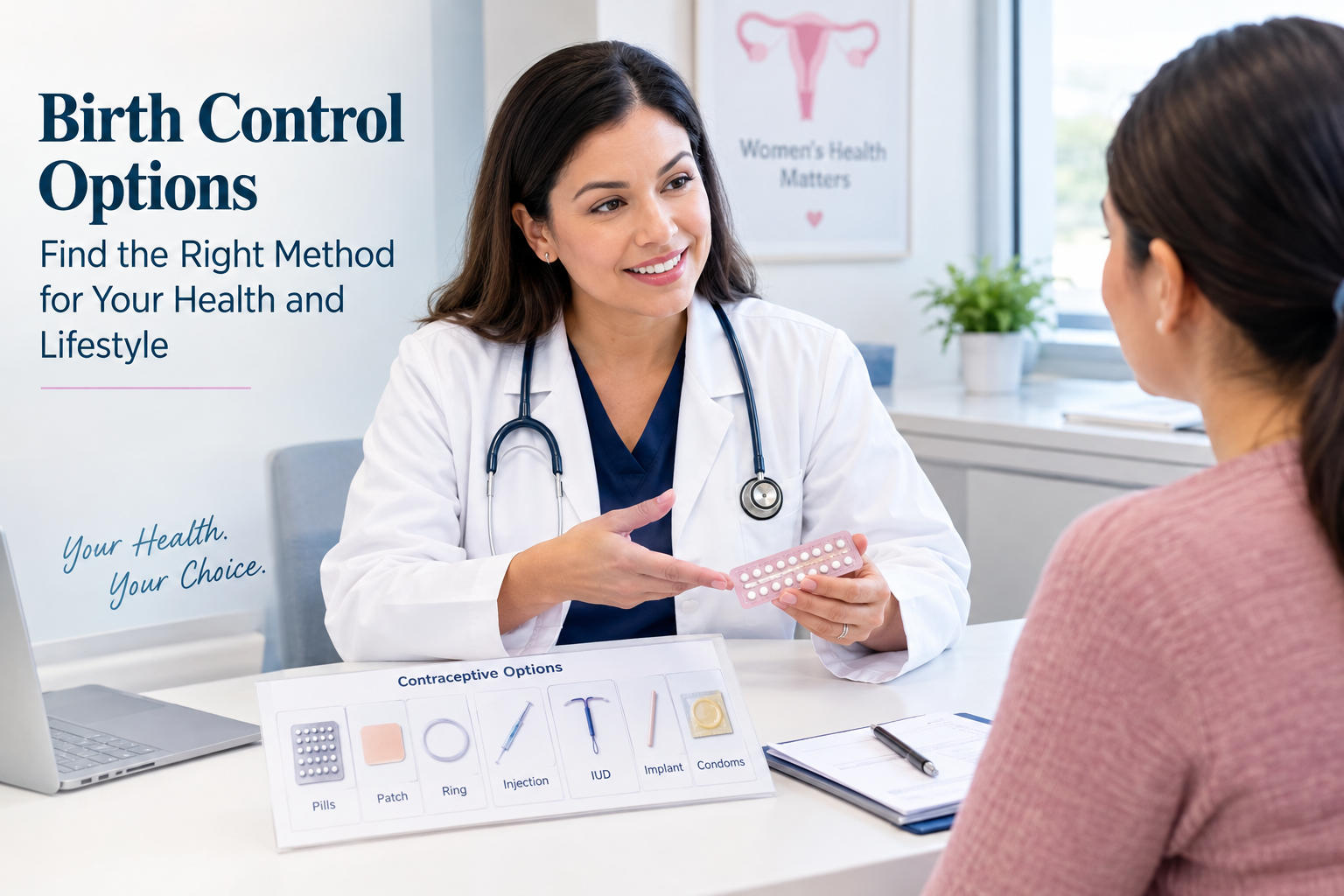
7 Common Types of Birth Control
1. Birth Control Pills
Birth control pills are oral medications used to prevent pregnancy. Depending on the formulation, they contain a combination of estrogen and progestin or progestin alone.
Most combined hormonal pills prevent pregnancy primarily by stopping ovulation. They also produce changes that make it more difficult for sperm to reach an egg.
Potential benefits include:
- Effective pregnancy prevention when taken correctly.
- More predictable or lighter periods for some users.
- Reduced menstrual cramps.
- Improvement in certain forms of acne.
- Management of some menstrual-related conditions.
The main consideration is consistency: pills generally need to be taken according to their specific instructions.
Some people may experience side effects, including nausea, spotting, or breast tenderness. Combined hormonal contraceptives may also carry risks that make them unsuitable for certain patients.
Your healthcare provider can review your medical history and help determine whether a birth control pill is an appropriate option.
2. Intrauterine Devices (IUDs)
An intrauterine device, or IUD, is a small device placed inside the uterus by a trained healthcare professional.
There are two main types:
- Hormonal IUDs: Release a progestin hormone and can reduce menstrual bleeding for some users.
- Copper IUDs: Do not contain hormones and provide long-term pregnancy prevention.
IUDs are among the most effective reversible contraceptive methods. Depending on the specific device, they can provide protection for several years without requiring daily action.
Potential considerations include discomfort during insertion, changes in menstrual bleeding, and the need for a healthcare professional to insert and remove the device.
IUDs do not protect against sexually transmitted infections, so additional protection may be appropriate depending on your circumstances.
3. Birth Control Implants
The birth control implant is a small, flexible rod placed beneath the skin of the upper arm by a trained healthcare professional.
It releases a hormone that prevents pregnancy and is designed to provide long-term protection without daily maintenance.
Benefits include:
- Very high effectiveness.
- Long-lasting pregnancy prevention.
- No need to remember a daily pill.
- Reversibility when the implant is removed.
The most common consideration is unpredictable bleeding, which may include spotting, irregular periods, or changes in menstrual flow.
A healthcare professional can explain how the implant works, its potential side effects, and whether it fits your health needs.
4. Birth Control Patch
The contraceptive patch is a hormonal method worn on the skin. It releases hormones that help prevent pregnancy.
Depending on the prescribed product, the patch is replaced according to a regular schedule, so you do not need to take a pill every day.
Some people appreciate its convenience, while others may prefer a method that does not require weekly attention.
Possible side effects include skin irritation, spotting, nausea, and breast tenderness. Like other combined hormonal contraceptives, the patch may not be appropriate for people with certain medical conditions or risk factors.
Discuss your medical history with a healthcare professional before choosing this method.
5. Vaginal Birth Control Ring
The vaginal ring is a flexible device placed inside the vagina that releases hormones to prevent pregnancy.
Depending on the specific product, it is used on a scheduled cycle and replaced according to its instructions.
Potential advantages include convenience and the possibility of more predictable menstrual bleeding.
Some users may experience vaginal irritation, spotting, or other hormonal side effects.
Because some vaginal rings contain estrogen, your provider should assess whether a combined hormonal method is safe for you.
6. Birth Control Injections
The contraceptive injection is a hormonal method administered at scheduled intervals by a healthcare professional or used according to the instructions for the specific product.
It may be convenient for people who prefer not to take a daily pill or use a device.
Possible considerations include irregular bleeding, changes in menstrual patterns, and potential weight changes. Some injectable contraceptives can also affect bone mineral density, and the return to fertility may be delayed after the last injection.
Your healthcare provider can explain the expected schedule, benefits, and risks before you begin.
7. Condoms and Barrier Methods
Barrier methods help prevent sperm from reaching an egg.
Examples include external condoms, internal condoms, diaphragms, and cervical caps.
Condoms are particularly important because latex and synthetic condoms can also reduce the risk of many sexually transmitted infections when used correctly.
However, barrier methods generally require correct use every time you have sex, and their effectiveness in preventing pregnancy depends on the specific method and how consistently it is used.
For additional pregnancy protection, some people choose to combine condoms with another contraceptive method.
Important: Most birth control methods do not protect against STIs. Condoms remain an important part of safer sex practices.
Medical source: American College of Obstetricians and Gynecologists (ACOG) — Birth Control.
Which Birth Control Method Is Most Effective?
Effectiveness varies depending on the contraceptive method and how it is used.
Long-acting reversible contraceptives, such as IUDs and implants, are among the most effective options because they do not require daily or per-encounter action.
Methods such as pills, patches, rings, and condoms depend more heavily on consistent and correct use.
When comparing options, it is important to distinguish between perfect use, which means following all instructions consistently, and typical use, which reflects how methods are used in everyday life.
Your provider can help you compare effectiveness rates and decide which method best fits your needs.
How Do You Choose the Right Birth Control Method?
The best contraceptive method is one that fits your health needs, preferences, and pregnancy plans.
Before choosing, consider the following factors.
Your Health History
Certain medical conditions, medications, and risk factors may affect which contraceptives are safe for you.
For example, some estrogen-containing methods may not be recommended for people with certain migraine patterns, a history of blood clots, or particular cardiovascular risks.
A medical evaluation can help identify the safest choices.
Your Lifestyle
Consider how much ongoing attention you are comfortable giving your contraceptive method.
If remembering a daily pill is difficult, a longer-acting option may be worth discussing. If you prefer a method you can stop using without a procedure, another approach may be more suitable.
Your Menstrual Cycle
Some hormonal contraceptives can reduce menstrual cramps, make bleeding lighter, or improve cycle predictability.
Others may cause irregular bleeding, particularly during the first few months of use.
If you already experience heavy periods or significant menstrual pain, tell your provider so these symptoms can be considered when selecting a method.
Your Future Pregnancy Plans
Some contraceptives are short-acting, while others provide protection for several years.
Most reversible methods allow pregnancy to become possible again after discontinuation or removal, although the timing varies by method and individual circumstances.
If you plan to become pregnant soon, your healthcare provider can help you compare options that fit your timeline.
Your Need for STI Protection
Hormonal contraceptives, implants, and IUDs do not protect against sexually transmitted infections.
If STI exposure is a concern, condoms and appropriate STI testing should be part of your reproductive healthcare plan.
Can Birth Control Help With Menstrual Problems?
Yes. Some hormonal contraceptives may help manage certain menstrual symptoms in addition to preventing pregnancy.
Depending on the method, potential benefits may include:
- Reduced menstrual cramps.
- Lighter menstrual bleeding.
- More predictable bleeding patterns.
- Improvement in certain forms of acne.
- Management of symptoms associated with some gynecological conditions.
However, not every method provides the same benefits, and some can cause irregular bleeding.
If your periods are unusually heavy, painful, or unpredictable, a healthcare professional should evaluate the underlying cause rather than assuming birth control alone will address the problem.
When Should You Talk to a Gynecologist About Birth Control?
Consider scheduling a gynecological appointment if you:
- Want to begin using contraception.
- Are experiencing side effects from your current method.
- Want to switch to a different birth control option.
- Have questions about long-term pregnancy prevention.
- Experience heavy or irregular periods.
- Have a medical condition that may affect contraceptive choices.
- Want to discuss family planning or pregnancy timing.
You do not need to wait until you experience a problem to discuss contraception. Preventive appointments are an opportunity to ask questions, review your health history, and make informed decisions.
Seek urgent medical care if you develop severe chest pain, sudden shortness of breath, fainting, or other potentially serious symptoms while using hormonal contraception.
Birth Control and Family Planning in Eagle Pass, TX
Choosing contraception is a personal decision, and professional guidance can help you understand the available options.
Southwestern Women’s Clinic in Eagle Pass, Texas, provides women’s healthcare and gynecological services. If you are considering birth control or need guidance about reproductive health, contact the clinic to ask about available family planning consultations and contraceptive options.
During a consultation, you can discuss your medical history, menstrual cycle, future pregnancy plans, and preferences to determine which options may be appropriate.
To learn more about the clinic and its services, visit Southwestern Women’s Clinic.
Frequently Asked Questions About Birth Control
What is the safest birth control method?
The safest method depends on your health history, medications, and individual risk factors. Many contraceptives are safe for most people, but some medical conditions make particular methods less suitable. A healthcare professional can help you choose an appropriate option.
What is the most effective reversible birth control?
IUDs and contraceptive implants are among the most effective reversible methods. They provide long-term pregnancy prevention without requiring daily action. Your provider can explain their differences and potential side effects.
Does birth control cause infertility?
Reversible birth control methods generally do not cause permanent infertility. However, the time it takes for fertility to return after stopping contraception varies by method. For example, fertility may take longer to return after certain contraceptive injections.
Can I change my birth control method?
Yes. You can discuss switching methods with your healthcare provider if your current contraceptive does not fit your needs or causes unwanted side effects. Planning the transition is important to avoid gaps in pregnancy protection.
Does birth control protect against sexually transmitted infections?
Most contraceptive methods do not protect against STIs. Condoms can reduce the risk of many sexually transmitted infections when used correctly and consistently.
Where can I get birth control guidance in Eagle Pass, TX?
You can contact Southwestern Women’s Clinic through its official website to ask about gynecological consultations and available family planning services.
Conclusion: Make an Informed Decision About Your Reproductive Health
Birth control offers several ways to prevent pregnancy, manage certain menstrual symptoms, and plan for the future. From pills and patches to IUDs, implants, injections, and condoms, each method has different benefits and considerations.
The right choice depends on your medical history, lifestyle, preferences, and reproductive goals.
If you are looking for birth control guidance in Eagle Pass, TX, Southwestern Women’s Clinic can be a starting point for discussing your women’s healthcare needs and finding out which family planning services are available.
Contact the clinic to ask about scheduling a gynecological consultation and discussing your contraceptive options.
Medical disclaimer: This article is for educational purposes only and does not replace individualized medical advice, diagnosis, or treatment. Consult a qualified healthcare professional before starting, stopping, or changing a contraceptive method.